
Things to do · Gushaini
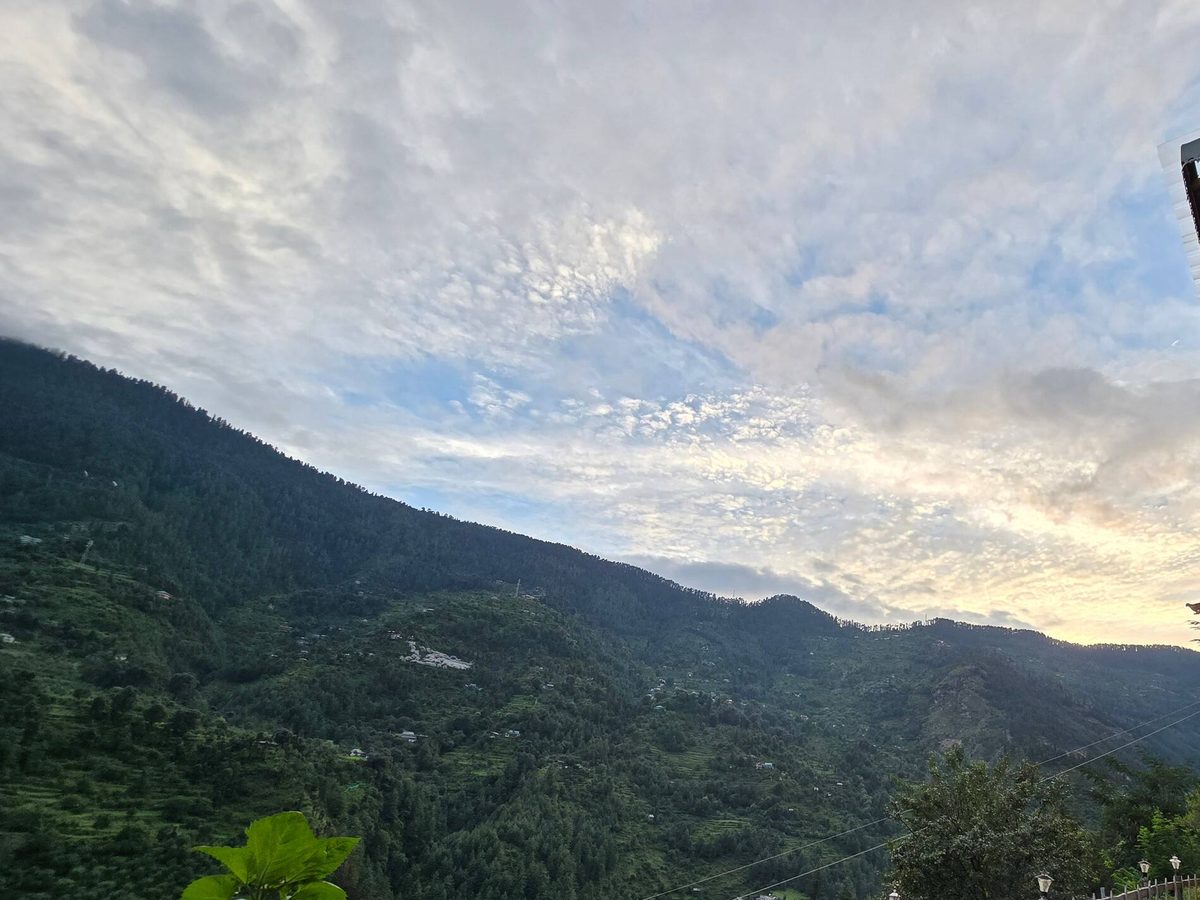
Gushaini, Tirthan Valley: the river village where the park treks begin
Where it is, how high it is, how to get there from Jibhi, what to do by the river, and the national-park treks that start here.
Short answer: Gushaini is a small village on the Tirthan river in Kullu district (PIN 175123), about 17 km by road from Jibhi via Banjar, usually 45 minutes to an hour. It sits at about 1,500 m, where the Tirthan meets the Palchan Nallah, and the Great Himalayan National Park names it as the road-head for its Tirthan valley treks. Go for a day by the river, a short walk up the trek trail, or the start of a permitted multi-day trek; it is a little milder than Jibhi, and trout fishing is closed from 1 November to the end of February.
Searching for Gushaini in Tirthan Valley? We host guests in Chhet, a few minutes past Jibhi and about 17 km from Gushaini, and it makes an easy day trip for river time. Here is what Gushaini actually is, where it sits, how high it is, how to get there, what to do (including the national-park treks that start here), the weather by month, and an honest answer to whether you should stay there or near Jibhi.
Where is Gushaini?
Gushaini is a small village on the Tirthan river in Kullu district, Himachal Pradesh, in the Banjar area. India Post lists a Gushaini branch post office under PIN code 175123, the same PIN as Banjar, Jibhi and Chhet (India Post pincode directory (data.gov.in)). From Banjar town, the Banjar–Bathad road follows the Tirthan upstream past Sairopa and Nagini to Gushaini, then carries on to Bathad (OpenStreetMap).
Two streams meet here. The Great Himalayan National Park describes the Tirthan rising at Hanskund Peak and joining the Palchan Nallah at Gushaini, then flowing on down the valley to Larji, where the Tirthan and Sainj join the Beas (GHNP: Tirthan Valley). The park also names Gushaini as the road-head for trekking in the Tirthan valley (GHNP: accessing the park), which is why the village shows up in every GHNP plan.
| Gushaini | At a glance |
|---|---|
| District | Kullu, in the Banjar area |
| PIN code | 175123 (Gushaini branch post office) |
| Altitude | About 1,500 m (park figure); elevation models put the village at about 1,570 m |
| River | The Tirthan, which meets the Palchan Nallah here |
| From Jibhi | About 17 km, 45 minutes to an hour via Banjar |
| From Banjar | About 10 km up the Banjar–Bathad road |
| Nearby on the same road | Nagini (about 3 km below), Sairopa (about 4 km below), Bathad (about 10 km further up) |
| What is there | The river, trout water in season, and the road-head for the national park's Tirthan valley treks |
Not to be confused with Gadagushaini. Gadagushaini (also written Garagushaini or "Gada Gushaini") is a different area on the Kullu–Mandi border, with its own post office listed under Mandi district. If your map shows a different road, check which one you typed.
Gushaini altitude
The national park's trek pages put Gushaini at about 1,500 m above sea level, the starting height of both its Tirthan treks. Global elevation models (Copernicus GLO-90 and SRTM) put the village point a little higher, at about 1,570 m. Either way, Gushaini sits roughly 200–300 m below Jibhi (about 1,800 m) and well over 1,500 m below Jalori Pass (about 3,120 m).
In practice that makes Gushaini typically about a degree milder than Jibhi on the same day. It is a river-valley village, not a high-mountain one.
How to reach Gushaini from Jibhi
- By car from Jibhi or Chhet: drive down NH-305 to Banjar, then take the Banjar–Bathad road up the Tirthan through Sairopa and Nagini. It is about 17 km and usually 45 minutes to an hour; drive it in daylight.
- From Banjar: about 10 km up the same road.
- From Jalori Pass: about 30 km, back down through Jibhi and Banjar. Doing Jalori and Gushaini on the same day is possible, but it is a long day in the short winter light.
- From Delhi or Chandigarh: follow the same route as for Jibhi until Banjar, then turn up the Tirthan road. Our Delhi to Jibhi by car guide covers the drive and parking; see also how to reach.
- Without a car: the park's access page says taxis and buses run from Aut to villages like Gushaini. If you are staying with us, tell us your plan the evening before and we will help arrange a local taxi (fares vary).
Things to do in Gushaini
- Sit by the river. The simplest and best plan: a morning or afternoon on the rocks beside the Tirthan. The water is fast and very cold all year, so keep children back from the edge, keep dogs on a lead near the water and do not climb wet boulders.
- Trout water, in season only. The Tirthan is trout country, but fishing needs a Himachal Fisheries licence, artificial fly or spoon baits only, and trout fishing is closed from 1 November to the last day of February. See Tirthan Valley trout fishing before you bring a rod.
- Walk a little way up the trek trail. Both of the park's treks that start at Gushaini begin with a 9 km walk from Gushaini to Rolla (about 2,100 m) "through the eco-zone of GHNP", with a gentle gradient at the start (GHNP: Tirath trek). A short out-and-back stroll is a gentle way to see the forest; for anything longer, or to go into the park, sort out the permit first (below).
- The Chhoie waterfall walk. Travel guides describe a forest walk to the Chhoie waterfall starting from Nagini, a little below Gushaini on the same road. The times quoted vary and we have not walked it ourselves, so ask locally for the start, wear shoes with grip, treat it as the sacred site it is for the local community, and skip it in heavy rain.
- Birding. The park says birding is good all year, with the best chances from March to June and September to November (GHNP: season-based activities).
- Further up the road, Bathad (about 10 km) is where the walk to Bashleo Pass begins, per the park's Banjar valley page. For more day trips by distance, see places near Jibhi within 50 km.
National park treks from Gushaini
Gushaini is the starting point for two of the Great Himalayan National Park's Tirthan valley treks. Both are proper multi-day treks, not day walks:
- Gushaini to Rakhundi top: 5 days, about 56 km round trip, rated easy to moderate. Gushaini to Rolla (9 km), Rolla to Shilt Hut (about 3,100 m), then Rakhundi (about 3,622 m), from where, the park says, you can see about 60% of the park area (GHNP: Gushaini to Rakhundi trek).
- Tirath trek: 7 days, about 76 km, moderate to strenuous. Via Rolla, Nada Thach (about 3,300 m) and Majhoni (about 3,800 m) to Tirath (about 4,000 m), the source of the Tirthan, with a glacial lake that is sacred to local people (GHNP: Tirath trek).
The rules, from the park's GHNP: fees, rules and guidelines page: entry to the park is not allowed without prior permission; permits come from the head office at Shamshi or the range office at Shairopa (Sairopa), about 4 km below Gushaini on the same road; your route must be approved by a range officer; and multi-day trekkers must engage certified guides and porters. Open fires are forbidden inside the park, litter must be carried out, and the park's list of forbidden items includes pets, so plan dog walks along the river road and village instead. Fees change, so check with the park office rather than relying on any figure you read online.
Best seasons for core-zone trekking, per the park: April to June and September to November (GHNP: season-based activities). For the bigger picture, see our Great Himalayan National Park guide.
Gushaini weather and temperature by month
Approximate averages for Gushaini, worked out from 2016–2025 reanalysis data and rounded:
| Month | Avg high / low | What it is like |
|---|---|---|
| Jan | 12°C / 1°C | Coldest month; frosty mornings |
| Feb | 14°C / 1°C | Cold; days slowly warming |
| Mar | 18°C / 5°C | Thawing, often showery |
| Apr | 22°C / 9°C | Mild days, cool nights |
| May | 25°C / 12°C | Warm and pleasant |
| Jun | 27°C / 16°C | Warmest; pre-monsoon |
| Jul | 26°C / 19°C | Monsoon; river high and fast |
| Aug | 25°C / 19°C | Monsoon; slippery paths |
| Sep | 24°C / 16°C | Rain easing late in the month |
| Oct | 22°C / 10°C | Dry and clear; river settles |
| Nov | 18°C / 6°C | Clear, cold nights, quiet |
| Dec | 15°C / 3°C | Cold; short days |
How we worked these out: daily ERA5 reanalysis data from Open-Meteo historical weather (ERA5) for 2016–2025, adjusted to Gushaini's height. The data grid is coarse, so Gushaini and Jibhi fall in the same cell: the difference between them (Gushaini about 1–1.5°C warmer) comes from the altitude adjustment. Rainfall is the same as in our best time to visit Jibhi table. For a trip this week, check a live forecast.
- October and November are the clearest months: dry, settled, and the river runs clear after the monsoon.
- December to February bring frosty mornings and short days. In the data, average snowfall at Gushaini's height is small, even in January, and less than at Jibhi. Treat snow here as a bonus, never the plan; Jalori Pass is where the snow is.
- July and August are monsoon months: the river is high, fast and muddy, and valley roads can be hit by slides. See Jibhi in the monsoon.


Gushaini or Jibhi: where to stay?
Honestly, it depends on what you want from the trip. We are not in Gushaini, and we do not name stays there.
- Sleep in Gushaini if the river is the point: you want the sound of water all night, or you are starting a park trek early the next morning.
- Stay near Jibhi if you also want Jalori Pass and Serolsar Lake, the Jibhi waterfall and Chehni Kothi, and a cottage you can drive right up to. Gushaini is then an easy day trip.
For a fuller comparison, see riverside or hillside near Jibhi and Jibhi vs Tirthan Valley: where to stay.
A Gushaini day from Chhet
- Morning: leave after breakfast and drive down to Banjar and up the Tirthan road. If a park trek is in your plans, stop at the range office at Shairopa on the way to ask about permits.
- Midday: the river at Gushaini, a short stroll up the trail, or the Chhoie walk from Nagini if the path is dry.
- Afternoon: start back with light to spare. From November to January sunset is between about 5:17 and 5:55 PM, so aim to be home by about 5 PM (sunrise and sunset times by month).
- Evening: heater on, dinner from our local chefs, and an early night.
Come back to a warm cottage after the river
For a couple, the glass house in Jibhi is for up to 2 guests: the bed sits right beside the glass and the cottage has a glass roof, and it has its own private hot tub facing the mountains, which is a good way to end a cold river day. Room decoration, a cake and a candlelight dinner are available on request with 1 day's advance notice.
For a family, the mud house cottages in Chhet take up to 3 guests each or 6 with both, side by side with a shared patio and garden, a fire pit and a loft in each. You can drive right up to the door, which helps with parents and small children after a day out, and our local chefs cook home-style meals from a menu. For a bigger group, the whole property sleeps 10 comfortably, and when you book all three cottages there are no other guests on site.
All three have a room heater, hot water runs 24x7 and there is power backup. A bonfire can be arranged on request at an extra charge, pets are welcome, and we can help arrange a taxi for your Gushaini day (fares vary). Send your dates on WhatsApp and we will tell you what is free.
Sources: GHNP: Tirath trek; GHNP: Gushaini to Rakhundi trek; GHNP: accessing the park; GHNP: Tirthan Valley; GHNP: fees, rules and guidelines; GHNP: season-based activities; India Post pincode directory (data.gov.in) (Gushaini BO, 175123, Kullu); road distances from OpenStreetMap routing, rounded; altitude from the park trek pages, cross-checked with Copernicus GLO-90 and SRTM elevation data; weather from Open-Meteo historical weather (ERA5). Park rules, permits and road conditions change, so check with the park office before you go.
Where to stay in Chhet, near Jibhi
Planning a Gushaini day from a warm base? Peaks N Valley Stays is in Chhet (PIN 175123), a few minutes past Jibhi. Every cottage has a room heater, hot water runs 24x7 and there is power backup if the valley supply drops. You can drive right up to the door and park free, our local chefs cook home-style meals, and pets are welcome.
Couples usually pick the glass house in Jibhi: the bed sits right beside the glass and the cottage has a glass roof, with a private hot tub and the valley beside you, for up to 2 guests. Families and friends take the mud house cottages in Chhet, up to 3 guests each or 6 with both, side by side with a shared patio. Room decoration, a cake and a candlelight dinner are available on request with 1 day's advance notice. A bonfire can be arranged on request at an extra charge.
Where is Gushaini?
Gushaini is a small village on the Tirthan river in Kullu district, Himachal Pradesh, in the Banjar area, with PIN code 175123. It is about 10 km up the Banjar–Bathad road from Banjar town, past Sairopa and Nagini, and about 17 km by road from Jibhi. The Great Himalayan National Park names it as the road-head for its Tirthan valley treks.
What is the altitude of Gushaini?
About 1,500 m above sea level, according to the Great Himalayan National Park's trek pages; global elevation models put the village point at about 1,570 m. That is roughly 200–300 m lower than Jibhi (about 1,800 m), so Gushaini is usually a little milder.
How far is Gushaini from Jibhi?
About 17 km by road, usually 45 minutes to an hour: down NH-305 to Banjar, then up the Tirthan valley road through Sairopa and Nagini. It makes an easy day trip from Jibhi or Chhet.
Can you trek into the Great Himalayan National Park from Gushaini?
Yes, with a permit. Gushaini is the start of the park's Gushaini to Rakhundi trek (5 days, about 56 km round trip) and the Tirath trek (7 days, about 76 km). Entry needs prior permission from the park offices at Shamshi or Shairopa, your route must be approved by a range officer, and multi-day trekkers must hire certified guides and porters.
Is Gushaini the same as Gadagushaini?
No. Gushaini is the Tirthan river village above Banjar. Gadagushaini (also written Garagushaini) is a different area on the Kullu–Mandi border, with its own post office listed under Mandi district. Check which one your map is taking you to.
Keep exploring
Related pages
Bathad, Tirthan Valley: village guide and the Bashleo Pass trail → Banjar, Himachal Pradesh: town guide, distances and weather → Larji Dam and the three rivers: a guide from Jibhi → Glass house in Jibhi → Mud house cottages in Chhet → Whole property for groups (sleeps 10) → Places near Jibhi within 50 km → Great Himalayan National Park guide → Tirthan Valley trout fishing → Riverside or hillside near Jibhi → Jibhi vs Tirthan Valley: where to stay → Book and contact →Where to stay
Stay with us in Chhet, near Jibhi
- Glass House in Jibhi with a private hot tub, for couples
- Mud house cottages in Chhet, Tirthan Valley, for families and friends
- Pet friendly stay in Jibhi: every cottage welcomes dogs
- Book a cottage in Jibhi direct on WhatsApp