
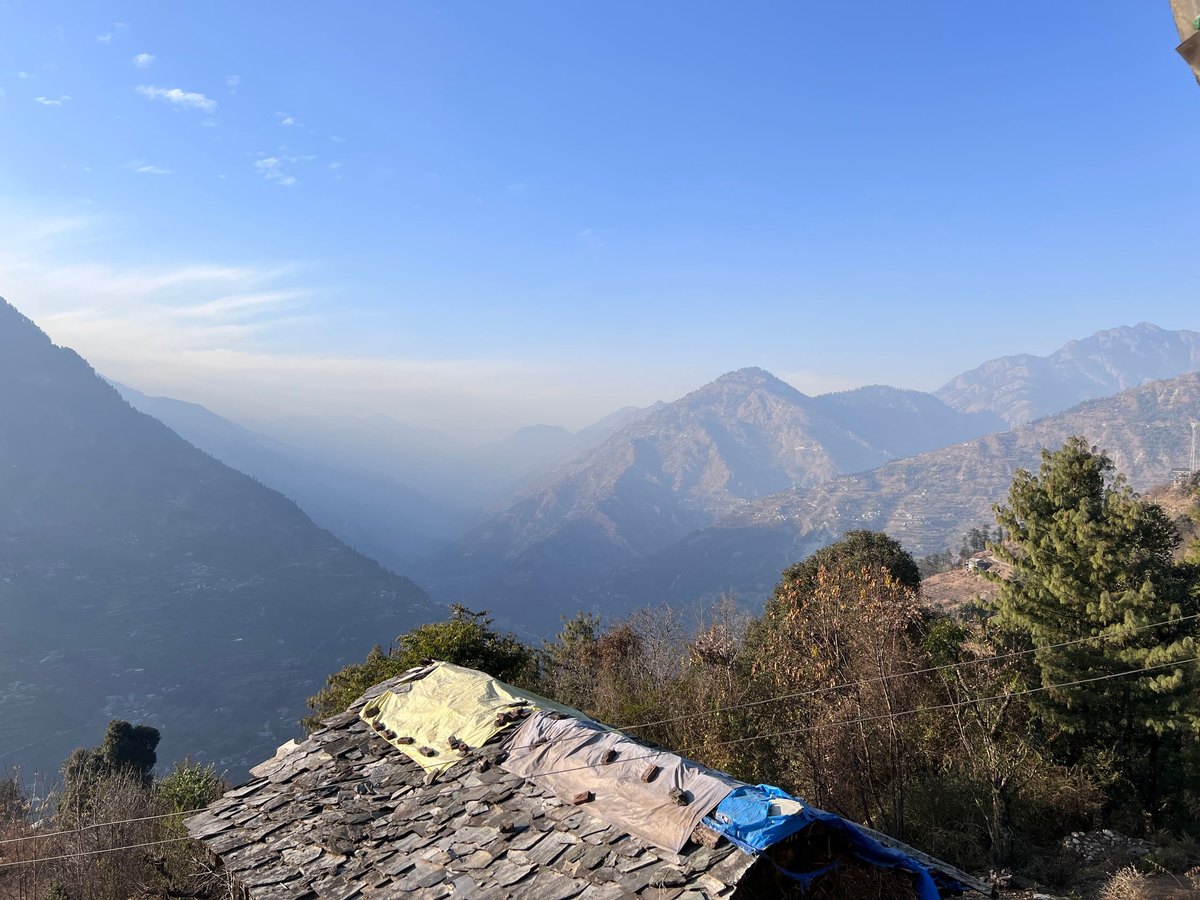
Compare · Shoja
Jibhi or Shoja: where to stay, where to visit
Honest comparison from hosts just below both.
Two villages 30 minutes apart, two very different nights. Here is how to choose.
Short answer: Jibhi or Shoja? Shoja sits higher, roughly 6–7 km above Jibhi on the Jalori road (about 30 minutes' drive, at around 2,690 m per local guides), so it is colder, holds snow longer and has bigger views but fewer places to stay and eat. Jibhi is lower, warmer, with more cafés and stays, the waterfall and an easier road. For most couples and families we suggest staying in or near Jibhi and doing Shoja and Jalori as a day trip. If snow and solitude matter more than convenience, Shoja is worth a look.
Jibhi vs Shoja at a glance
- Height and cold: Shoja is noticeably higher and colder; nights are harsher from November.
- Snow: Shoja sees and keeps snow more often than Jibhi village; Jibhi gets snow some winters, mostly January–February, never guaranteed.
- Road: the climb to Shoja is narrow and steep; after snow it can need chains or a 4x4. Jibhi is on the easier stretch from Banjar.
- Food and stays: Jibhi has more choice; Shoja has a few guesthouses and cafés.
- Views: Shoja has wider mountain views; Jibhi has forest, river and village views.
- Access to Jalori: Shoja is closer to the pass; from Jibhi it is roughly 45 minutes when open.
Which is better for couples?
For a romantic trip, comfort matters more than altitude. You want a warm room, hot water and a road that reaches the door on a cold night. That usually points to Jibhi or a village just past it. Our glass house in Jibhi in Chhet has a glass roof, valley views from the bed and a private hot tub, for up to 2 guests, with a room heater, 24x7 hot water and power backup. Room decoration, a cake and a candlelight dinner are available on request with 1 day's advance notice. Then drive up to Shoja for the views in the afternoon.
Which is better in winter?
If you want the best chance of walking in snow, Shoja is higher and holds it longer, but it is also harder to reach and colder at night. A good compromise: stay lower, watch the forecast, and go up to Shoja on a clear day after a snowfall, with a local taxi driver who knows the road. See Jibhi snowfall and Jibhi in winter.
Jibhi + Shoja itinerary
- Day 1: arrive in Jibhi, Jibhi waterfall.
- Day 2: drive up via Shoja to Jalori Pass and walk to Serolsar Lake (when open); stop in Shoja for tea and views on the way back.
- Day 3: Chehni Kothi or the Tirthan river, then depart.
Full plans: Jibhi itinerary.
Getting to Shoja from Jibhi
Local taxis do the Jibhi–Shoja hop and the Jalori run; staying with us, ask the evening before and we will help arrange one (fares vary). If you drive yourself, go slow on the narrow bends and avoid the road after dark in winter.
Jibhi, Shoja or Tirthan?
A third option people weigh is the Tirthan river side near Gushaini, quieter and closer to the national park. We compare it in Jibhi vs Tirthan Valley: where to stay.
Shoja height and distance are approximate, from local route guides; road conditions above Jibhi change quickly in winter.
Where to stay in Chhet, near Jibhi
Stay where the nights are easy, and visit where the views are big. Peaks N Valley Stays is in Chhet (PIN 175123), a few minutes past Jibhi. Every cottage has a room heater, hot water runs 24x7 and there is power backup if the valley supply drops. You can drive right up to the door and park free, our local chefs cook home-style meals, and pets are welcome.
Couples usually pick the glass house in Jibhi: a glass roof over the bed, the valley beside you and a private hot tub, for up to 2 guests. Families and friends take the mud house cottages in Chhet, up to 3 guests each or 6 with both, side by side with a shared patio. Room decoration, a cake and a candlelight dinner are available on request with 1 day's advance notice. A bonfire can be arranged on request at an extra charge.
Jibhi or Shoja, which is better?
Jibhi is lower, warmer and easier, with more stays and food. Shoja is higher and colder, with bigger views and more snow. Most couples and families stay near Jibhi and visit Shoja as a day trip.
How far is Shoja from Jibhi?
Roughly 6 to 7 km up the Jalori road, about 30 minutes by car on a narrow, steep road.
Does Shoja get more snow than Jibhi?
Yes. Shoja is higher and usually sees and keeps snow more often than Jibhi village. Neither is guaranteed on a given date.
Is Shoja road open in winter?
The road up to Shoja is usually driveable, but it can be icy after snow. Jalori Pass beyond it often closes after heavy snow.
Where should couples stay, Jibhi or Shoja?
Somewhere warm with a road to the door. Our Glass House in Chhet near Jibhi has a private hot tub, room heater, 24x7 hot water and power backup.
Keep exploring
Related pages
Shoja village guide: altitude, weather and places to visit → Places near Jibhi within 50 km, sorted by distance → Jibhi or Shangarh or Chakrata: which is better? → Jibhi vs Tirthan Valley → Stay near Jalori Pass → Jibhi snowfall → Glass house in Jibhi → Mud house cottages in Chhet →Where to stay
Stay with us in Chhet, near Jibhi
- Glass House in Jibhi with a private hot tub, for couples
- Mud house cottages in Chhet, Tirthan Valley, for families and friends
- Pet friendly stay in Jibhi: every cottage welcomes dogs
- Book a cottage in Jibhi direct on WhatsApp